Curly Pixie Hairstyles: 7 Stunning Trends That Define 2025
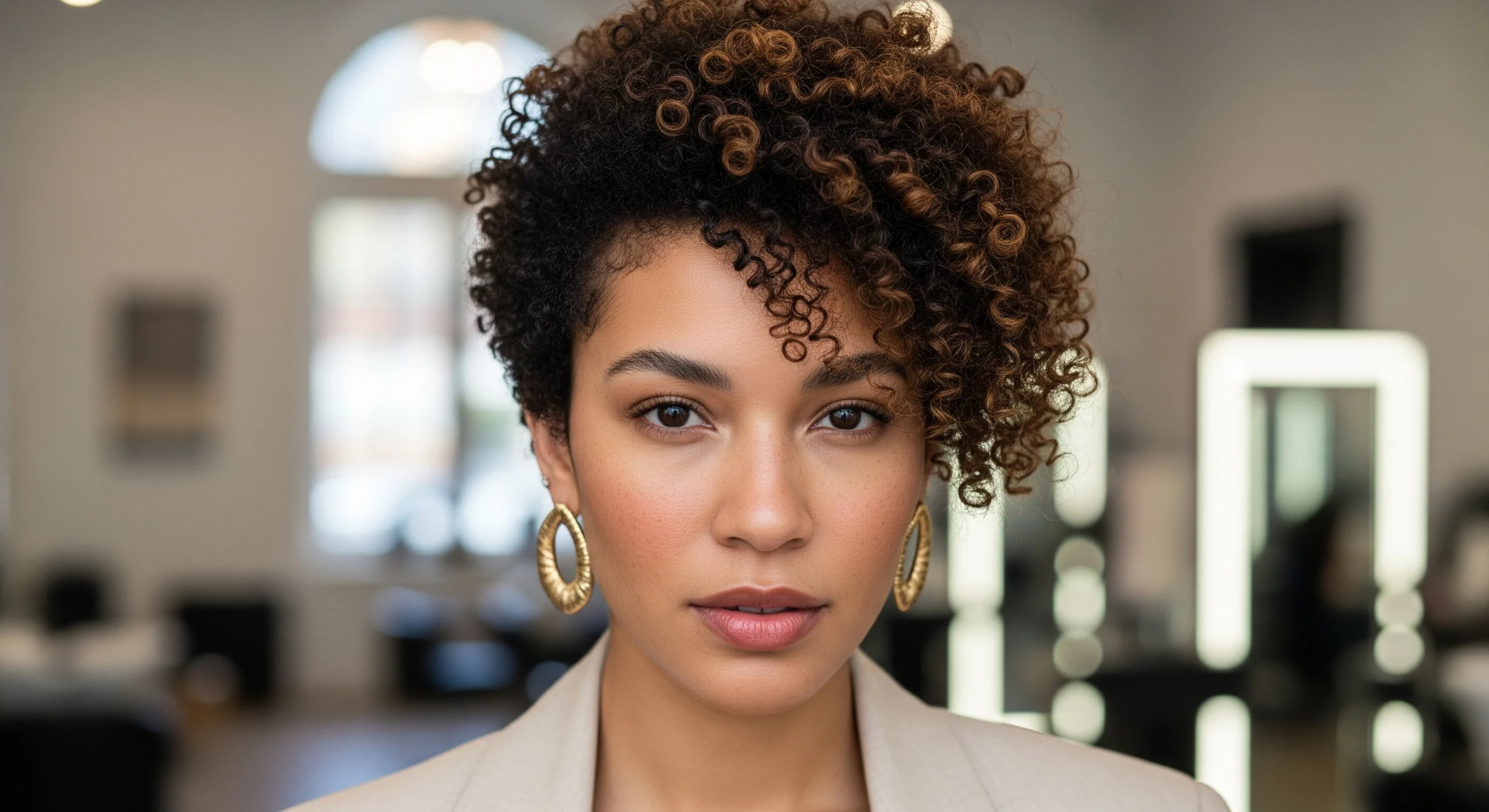
As we embrace 2025, curly pixie hairstyles are making a bold statement in the world of fashion and self-expression. Gone are the days when short hair was considered “limiting” for textured hair. Today, chic and playful curly pixies reflect a celebration of natural volume, coil patterns, and freedom from hours of styling. Short curly pixie cuts have…
As we embrace 2025, curly pixie hairstyles are making a bold statement in the world of fashion and self-expression. Gone are the days when short hair was considered “limiting” for textured hair. Today, chic and playful curly pixies reflect a celebration of natural volume, coil patterns, and freedom from hours of styling.
Short curly pixie cuts have evolved significantly, moving away from the “poodle” stereotypes of the past into edgy, sophisticated, and high-fashion territories. Whether you have loose beachy waves (Type 2C), springy corkscrews (Type 3B), or dense, beautiful coils (Type 4C), there is a cut tailored to your specific geometry.
This ultimate guide covers the latest curly pixie hairstyle trends, face shape mapping, styling tutorials, and the essential maintenance rules to keep your look fresh and fabulous all year long.
Why 2025 is the Year of the Curly Pixie
The “Zero-Click” Benefits
- Time Reclaimed: Cutting your hair short can reduce your wash-and-go routine from 45 minutes to 15.
- Damage Reset: A pixie cut is the ultimate “Big Chop,” effectively removing years of heat damage, split ends, and chemical processing, allowing new virgin hair to grow.
- Natural Facelift: By exposing the neck and jawline, curly pixie hairstyles draw the eye upward, lifting the cheekbones and creating a youthful, anti-aging effect without makeup or procedures.
1. Matching Your Face Shape: The Golden Rules
The Round Face: Go for Asymmetry
If you have a round face, the goal is elongation.
- The Cut: Ask for an asymmetrical pixie with a deep side part.
- Why it works: Keeping one side longer (the “bang” area) and the other tapered tight creates a diagonal line across the face, which breaks up the roundness. Height (volume) at the crown also elongates the face shape.
The Square Face: Soften the Edges
Defined jawlines are beautiful, but a blunt cut can make them look harsh.
- The Cut: A Wisp-Eared Pixie or shaggy pixie.
- Why it works: Ask your stylist to leave “tendrils” or soft, wispy curls around the ears and nape. This softness acts as a contour, blurring the sharp angles of the jaw.
The Oval Face: The Universal Recipient
- The Cut: The Classic Undercut Pixie.
- Why it works: You can pull off almost anything. To be trendy in 2025, go very short on the sides to maximize the contrast with the curls on top.
The Heart Face: Manage the Forehead
- The Cut: Side-Swept Bang Pixie.
- Why it works: Heart shapes have wider foreheads. A heavy curly fringe draped to the side balances the upper face width with the narrower chin.
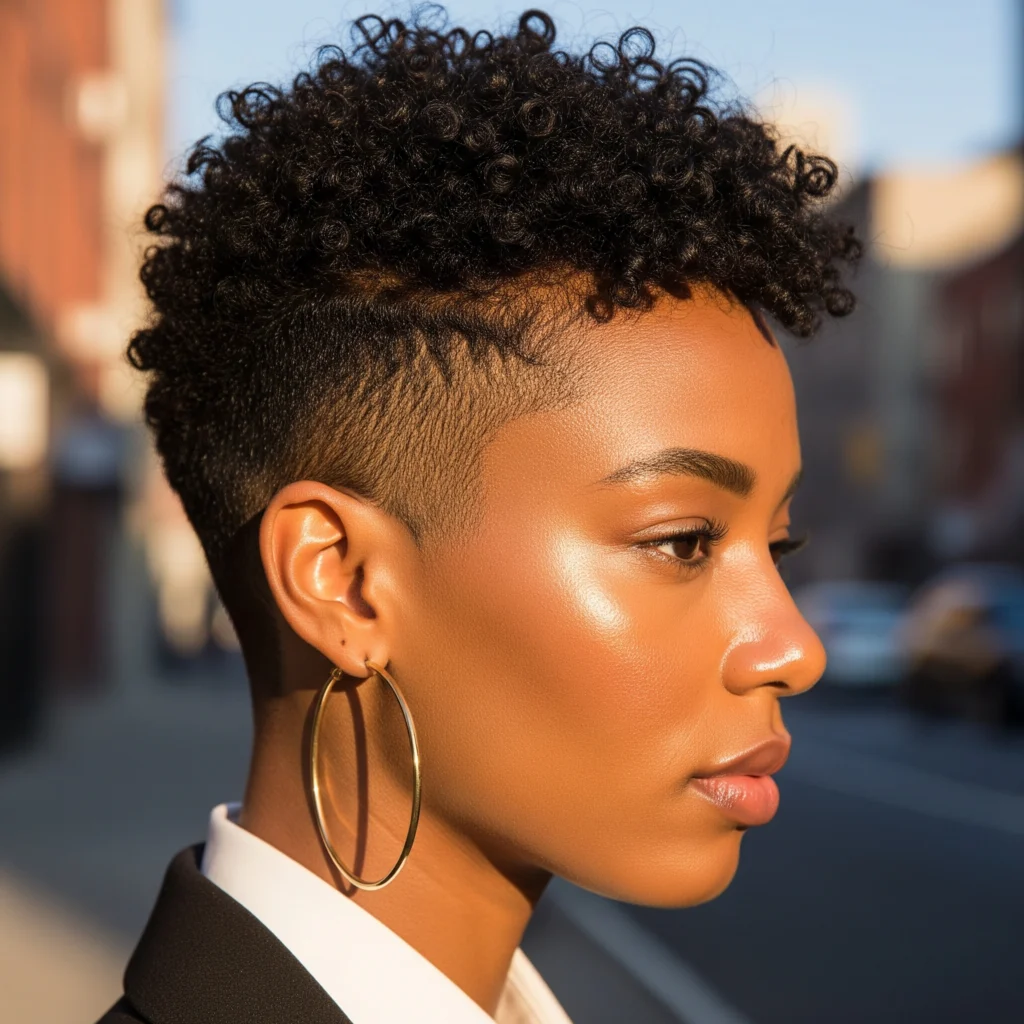
2. 2025 Trend Report: Top Curly Pixie Styles
The “Undercut” Curly Pixie
This is the most popular choice for women with thick Type 3 or Type 4 hair.
- The Concept: The sides and back are shaved or clipped down to a #2 or #3 guard, while the top is left 3-5 inches long.
- The Benefit: It physically removes bulk from the sides, preventing the hair from growing “out” into a triangle shape. It keeps the neck cool in the summer and focuses all the drama on the crown.
The “Bixie” (Bob-Pixie Hybrid)
Perfect for the commitment-phobic or those growing out a shorter cut.
- The Concept: A blend of a pixie’s texture and a bob’s length. The hair is usually ear-length to chin-length but heavily layered to prevent weight.
- The Benefit: It offers enough length to tuck behind the ears but is short enough to offer that “pixie” volume.
The “Wet Look” Finger Waves
Inspired by red-carpet looks from stars like Zendaya.
- The Concept: Using high-gloss gels to sculpt the curls close to the head in a structured, retro pattern.
- The Benefit: Sophistication. This is perfect for formal events where you want your curly pixie to look deliberate and high-fashion rather than playful.
3. Styling Tutorial: Routine for Types 3 & 4 Curls
The biggest mistake women make with curly pixie hairstyles is using the same products they used when their hair was long. Short curls defy gravity differently and need lighter products.
Step 1: The Sulfate-Free Cleanse
Detergents like Sodium Lauryl Sulfate create fluff. Switch to a hydrating cream cleanser.
- Recommended: Brands that specify “Co-Wash” or “Low-Poo.”
Step 2: Lighter Moisture
Butter-based conditioners that work on long hair will weigh a pixie down, making it look greasy.
- The Shift: Use a water-based leave-in conditioner. Focus it on the ends of your curls, avoiding the scalp to maintain volume at the roots.
Step 3: Finger Coiling vs. Scrunching
- Type 2 (Wavy): Scrunch mousse into damp hair to encourage the curl.
- Type 3/4 (Curly/Coily): Do not scrunch, as this creates frizz. Instead, use “shingling” or finger coiling. Take small sections of hair with a defining gel on your finger and twirl it to create uniform spirals.
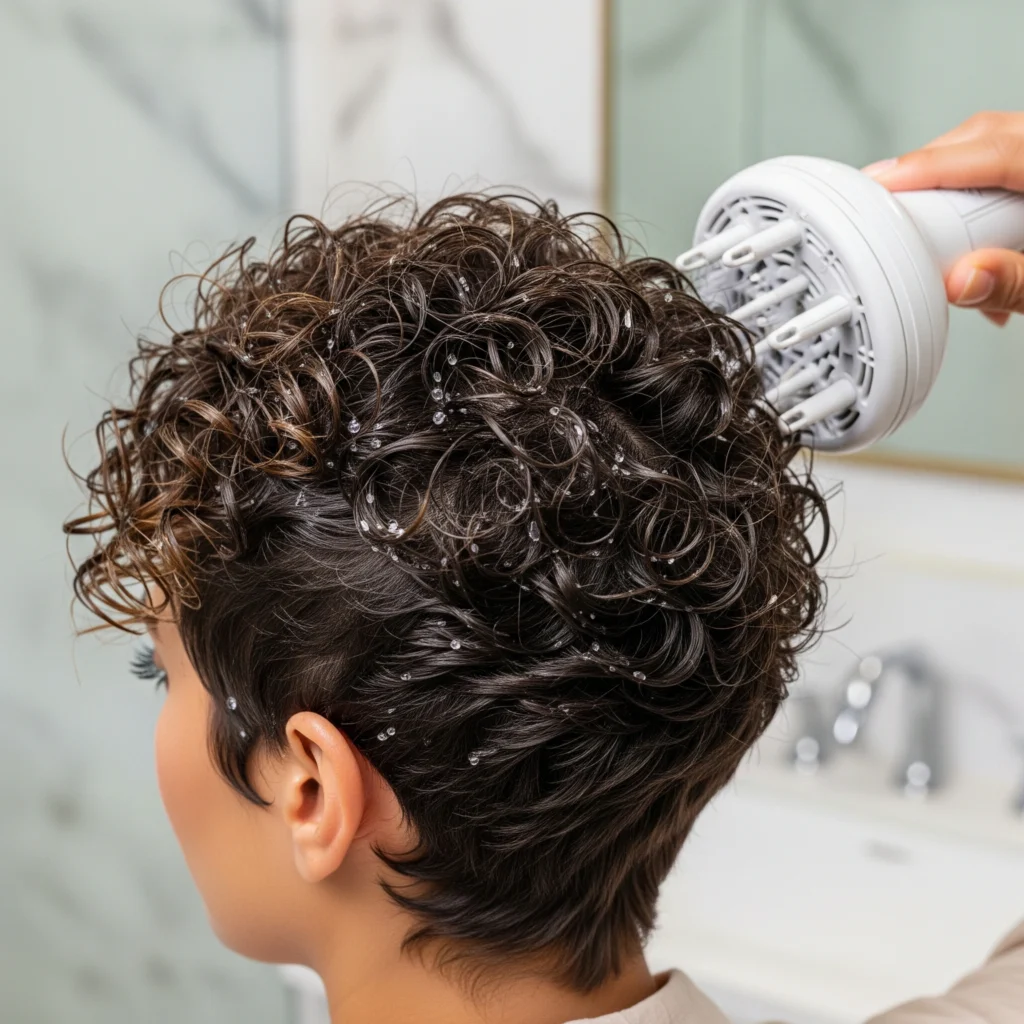
Step 4: The Diffuser
Never air-dry flat if you want volume.
- Technique: Flip your head upside down. Use a diffuser attachment on low heat/low speed. Push the dryer toward your scalp to lift the roots. This is the secret to that “Insta-famous” volume.
4. Maintenance: The Cost of Being Chic
While the daily routine is faster, the monthly maintenance increases. Short hair loses its “style” shape faster than long hair.
- Trims: Schedule a trim every 4 to 6 weeks. Once the hair grows over the ears or down the neck, the “pixie” silhouette transforms into a “mullet” (unless that is your goal!).
- Morning Refresh: You cannot just wake up and go. Short curls get flattened during sleep.
- The Fix: Keep a spray bottle of water mixed with a little leave-in conditioner. Mist your hair in the morning to reactivate the product from the day before, fluff with your fingers, and go.
- Night Routine: Invest in a satin pillowcase or a silk bonnet. Cotton absorbs moisture and causes friction, leading to breakage at the sensitive nape area.

5. Transitioning: Color and Growing It Out
Adding Color to Pixies
Because short hair is cut frequently, it is actually the healthiest canvas for hair color. You are constantly cutting off the damage.
- 2025 Color Trend: “Pintura Highlights”. This involves painting lightener onto individual curls (the “sun-kissed” look) rather than foiling entire sections. It adds dimension and shows off the texture of the pixie.
- Bold Moves: Platinum blondes and coppers are trending for pixies because the maintenance is lower—roots are easily disguised by the textured curls.
The “Grow-Out” Plan
Growing out a pixie can be awkward without a plan.
- Stage 1 (Months 1-3): Keep trimming the back (nape) short while letting the top layers grow. This prevents the “mullet” tail.
- Stage 2 (Months 4-6): Transition to a “Bixie.” Start tucking the side pieces behind your ears.
- Stage 3 (Month 6+): Once the top layers reach the chin, you have officially arrived at the Bob stage.
6. Real Pros & Cons Summary
To make an informed decision, let’s strip away the marketing and look at the reality of life with a short curly cut.
| Feature | The Advantage (Pro) | The Drawback (Con) |
| Product Usage | One bottle of conditioner lasts 3x longer. Money saved. | You need more styling products (gels/pastes) to keep structure. |
| Weather | Cooler in summer; no heavy hair on your neck. | Cowlicks go crazy in humidity; no ponytail option for gym/rain. |
| Styling Time | Drying takes minutes, not hours. | You must style it every time you wash; you can’t “hide” hair in a bun. |
| Face Impact | Features pop; earrings become a major accessory. | There is no hair to hide behind; face shape is fully exposed. |
7. Expert Q&A (FAQ)
Q: Can I get a pixie if my hair is frizzy?
A: Yes, but the “frizz” is often just a lack of moisture or definition. A shortcut removes dead ends which contribute to frizz. However, a pixie requires styling gel to keep the definition. Without product, a short curly cut will naturally fluff out.
Q: Is a curly pixie appropriate for older women (50+)?
A: Absolutely. As we age, gravity pulls our features down. Long hair can drag the face down further. A voluminous pixie draws the eye up, acting as a visual lift. Look at icons like Viola Davis or Jamie Lee Curtis—short cuts radiate power and confidence.
Q: What do I tell my barber/stylist if I have Type 4 hair?
A: Ask for a “Tapered Cut.” This preserves length at the crown for styling versatility (twists, coils) but keeps the edges clean and sharp. Request that they shape the cut dry first to account for shrinkage, which is significant in Type 4 hair.
Conclusion: Take the Leap
A curly pixie hairstyle is not just a haircut; it is a lifestyle change that prioritizes hair health and bold aesthetics. Whether you choose the soft romance of a shaggy pixie or the sharp lines of an undercut, 2025 is the perfect year to embrace the texture you were born with.
Remember: Hair grows back. The freedom you feel from the big chop, however, often lasts a lifetime. Consult with a curl specialist in your area, bring photos from this guide, and step into the new year with a look that is unapologetically you.