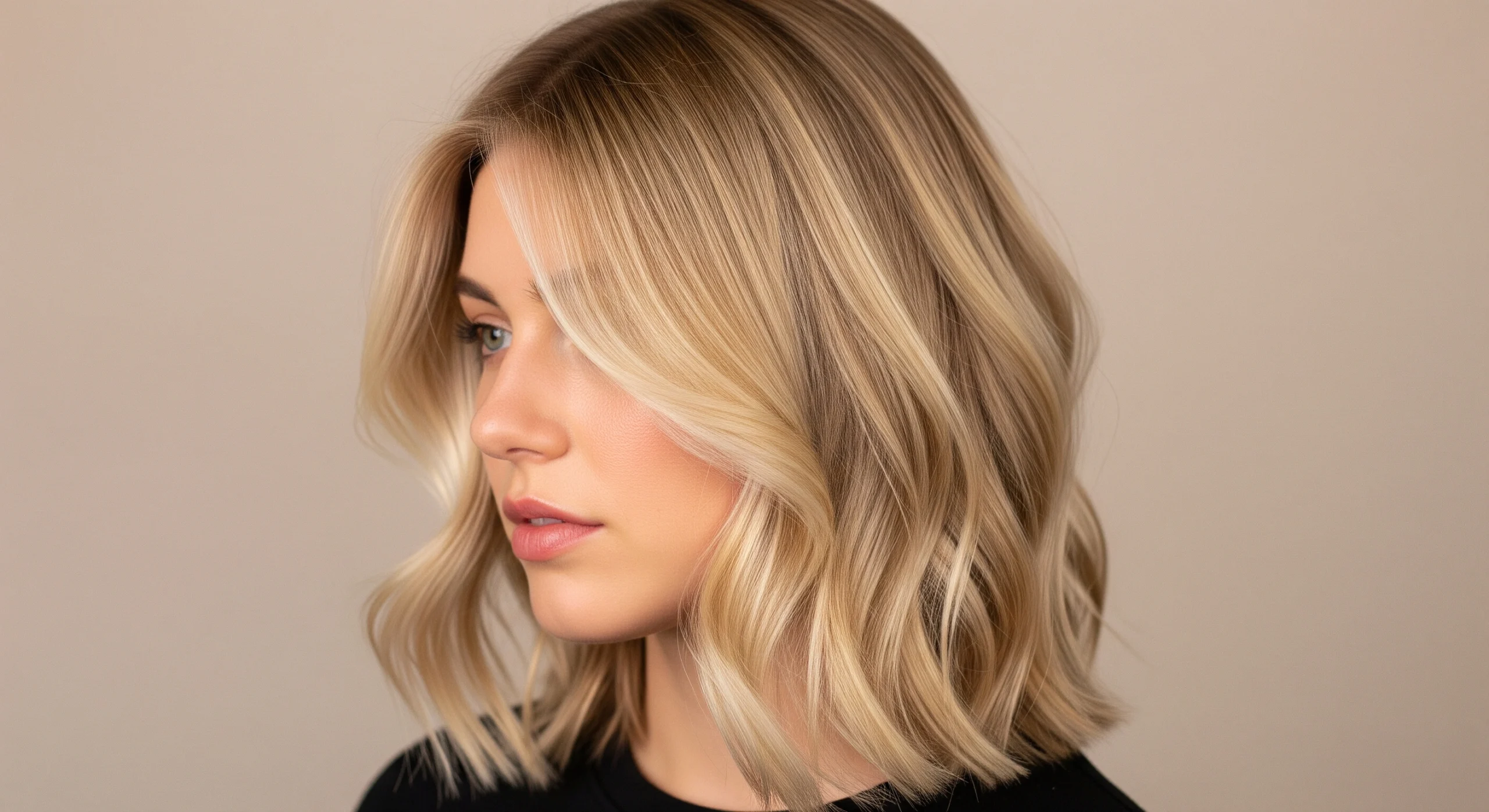
Creamy Blonde Hair Color: 7 Best Secrets for Perfect Shine
Introduction The era of stark, icy platinum is evolving. Recent search data from TikTok and Pinterest indicates a massive shift, with searches for “lived-in luxe blonde” and softer hues spiking over 200% this quarter alone. The “it” shade driving this movement? The effortlessly expensive-looking creamy blonde hair color. Unlike traditional bleaching which often leaves hair looking…
Introduction
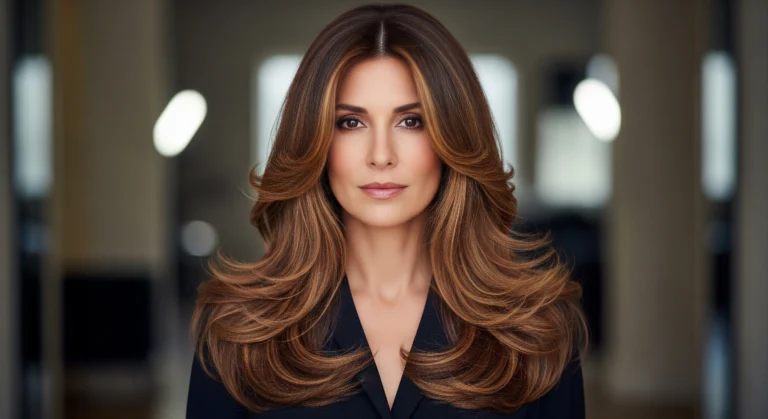
The era of stark, icy platinum is evolving. Recent search data from TikTok and Pinterest indicates a massive shift, with searches for “lived-in luxe blonde” and softer hues spiking over 200% this quarter alone. The “it” shade driving this movement? The effortlessly expensive-looking creamy blonde hair color.
Unlike traditional bleaching which often leaves hair looking flat or fried, the creamy blonde hair color strikes a delicate balance between cool ash and warm gold, resulting in a buttery, milky finish that reflects light beautifully. However, achieving this look isn’t just about paint—it’s about chemistry. The biggest pain point my clients face isn’t just getting the color; it’s the post-salon reality: fighting the “brassy” oxidation, battling dehydrated strands, and losing that salon-fresh volume.
In this guide, we are going to treat your hair like a canvas and a science experiment. We will dive deep into preserving the structural integrity of your strands, utilizing advanced bond-building technology, and mastering the styling techniques required to showcase that mirror-like shine.
Essential Toolkit & Product Breakdown
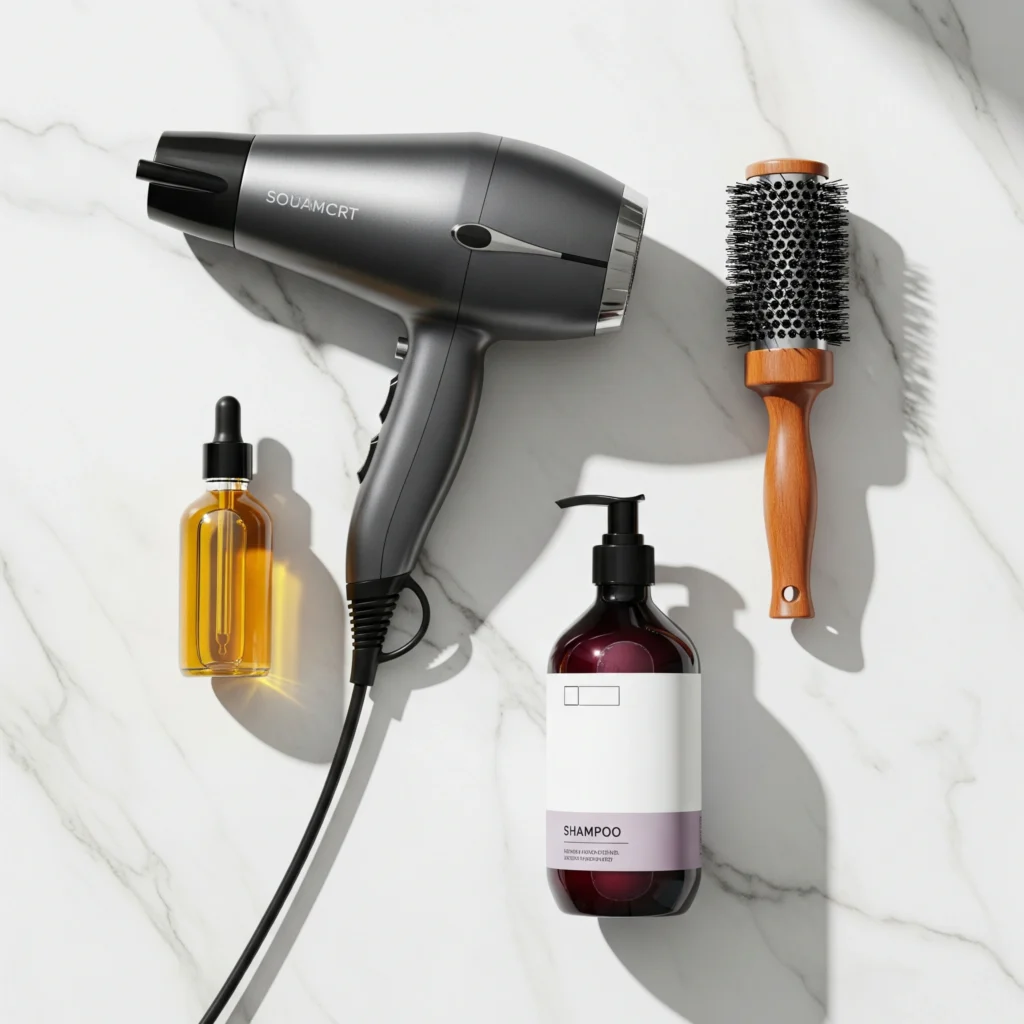
To maintain a high-end creamy blonde hair color, you are battling oxidation and porosity. This toolkit focuses on maintaining the lipid layer and ensuring the color molecules stay vibrant.
Prep Products (The Foundation)
- Bond-Building Treatment: Essential for repairing the disulfide bonds broken during coloring.
- Pro Pick: K18 Molecular Repair Mask (peptides penetrate the cortex).
- Budget Pick: L’Oreal Elvive Bond Repair pre-shampoo concentrate.
- Sulfate-Free Purple Shampoo: Use sparingly!
- Science Check: You need a low pH shampoo to help facilitate a cuticle seal, locking the color in.
- Thermal Protection: Non-negotiable for blonde hair. Look for spray polymers that deflect heat up to 450°F.
Finishing Products (The Polish)
- Lightweight Bonding Oil: To mimic natural sebum distribution without weighing down the root.
- Texture Spray: For that “lived-in” finish.
Tools: Pro vs. Budget
- The Dryer:
- Pro: Dyson Supersonic (Smart heat control prevents frying the follicle).
- Budget Hack: Conair InfinitiPro (Ceramic technology reduces hotspots).
- The Brushes:
- Pro: Ibiza Boar Bristle Round Brush (Boar bristles carry natural oils down the shaft to smooth high-porosity blonde hair).
- Budget Hack: A mix-bristle cushioned paddle brush for detangling without snapping fragile ends.
Time Commitment & Hair Prep
A creamy blonde hair color is an investment of time, even after you leave the salon chair. The “rich girl hair” look requires meticulous styling to reflect light, which enhances the creamy tone.
- Time Required:
- Washing/Bonding Routine: 20 minutes.
- Active Styling: 20–45 minutes (depending on density and texture).
- Hair Prep State:
- Day 1 vs. Day 2: This styling protocol creates the most “glass-hair” shine on damp, freshly washed hair where the cuticle can be manipulated from wet to dry. However, the color looks best on Day 2 when natural oils have settled.
- Dryness Level: Begin your blow-dry when hair is 70% air-dried (or diffused) to minimize mechanical damage.
- Skill Level: Intermediate. (Requires knowledge of sectioning and tension).
Step-by-Step Styling Protocol
Step 1: The Bio-Active Wash & Prime
Before styling, wash with a bond-building system. Since blonde hair has higher porosity, it soaks up water quickly but loses it just as fast.
- Action: Squeeze out excess water; do not rub (friction causes frizz).
- Texture Adjustment:
- Type 1-2 (Straight/Wavy): Apply product mid-shaft to ends to maintain root volume.
- Type 3-4 (Curly/Coily): Section hair and rake leave-in conditioner from root to tip to ensure every curl clump is hydrated before sealing.
Step 2: Sectioning and Mapping
Divide hair into 4 distinct quadrants using clips.
- Stylist Secret: Don’t grab too much hair. If the section is wider than your brush, you aren’t applying consistent tension, and the heat won’t penetrate the core of the section.
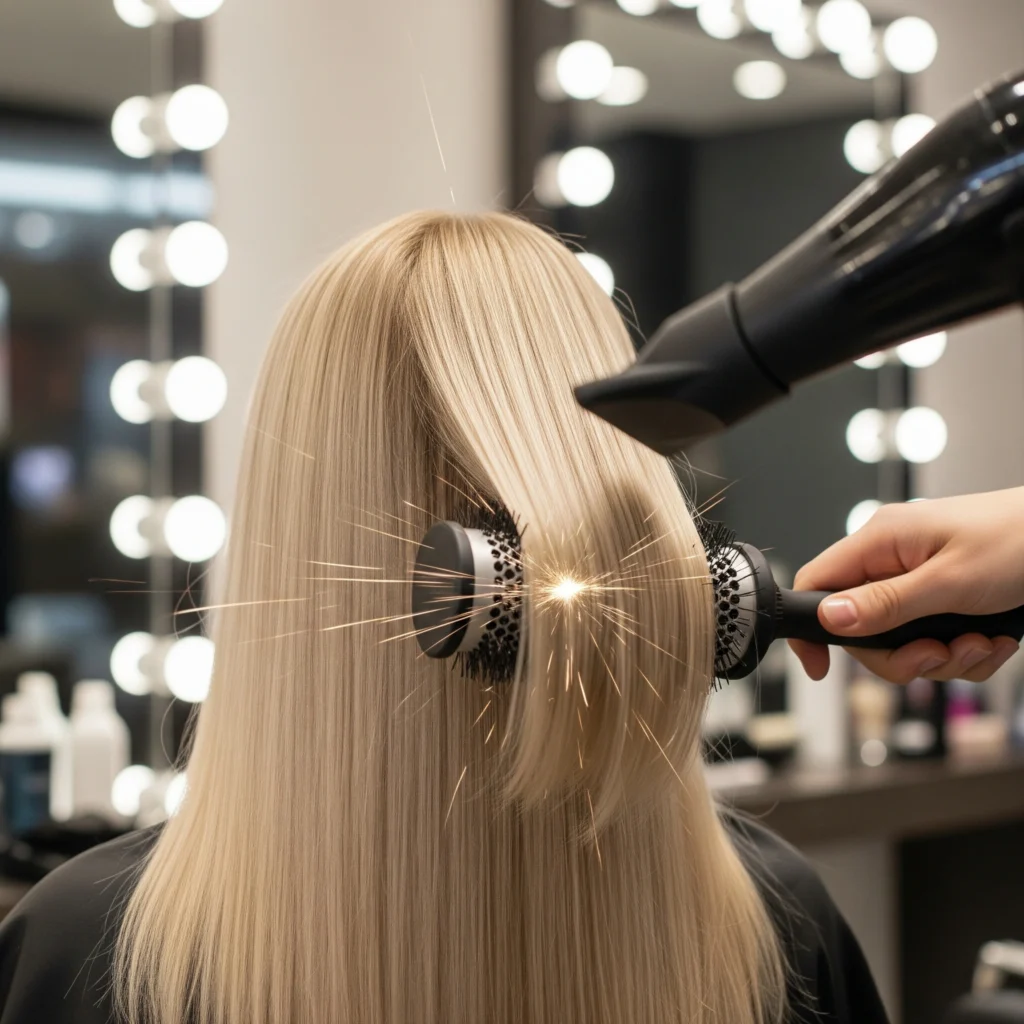
Step 3: The Tension Blow-Dry
This step aligns the scales of the hair shaft (the cuticle).
- Action: Place the round brush under the section. Direct the nozzle of your dryer down the hair shaft.
- Gliding: Glide the brush slowly. If you rush, you don’t set the hydrogen bonds.
- Texture Adjustment:
- Fine Hair: Lift straight up at the root for volume before smoothing the mid-lengths.
- Textured Hair (Type 3/4): High tension is key here. You may need a higher heat setting initially to stretch the bond, but lower the heat as the hair dries to protect the lighter color molecules.
Step 4: The Cool Shot Lock
Once a section is dry, keep it wrapped around the brush and hit the cool shot button for 10 seconds.
- Why? Heat makes the keratin plastic/moldable; cold solidifies it. This “locks” the style and seals the cuticle for that creamy, reflective sheen.
Step 5: Sealing the Ends
Warm a pea-sized amount of oil in your hands and “press” it into the last 3 inches of your hair.
- Stylist Secret: Avoid rubbing vigorously. Pressing smoothes the “frizz halo” that blondes often struggle with due to chemical processing.
The Science of Hair Health
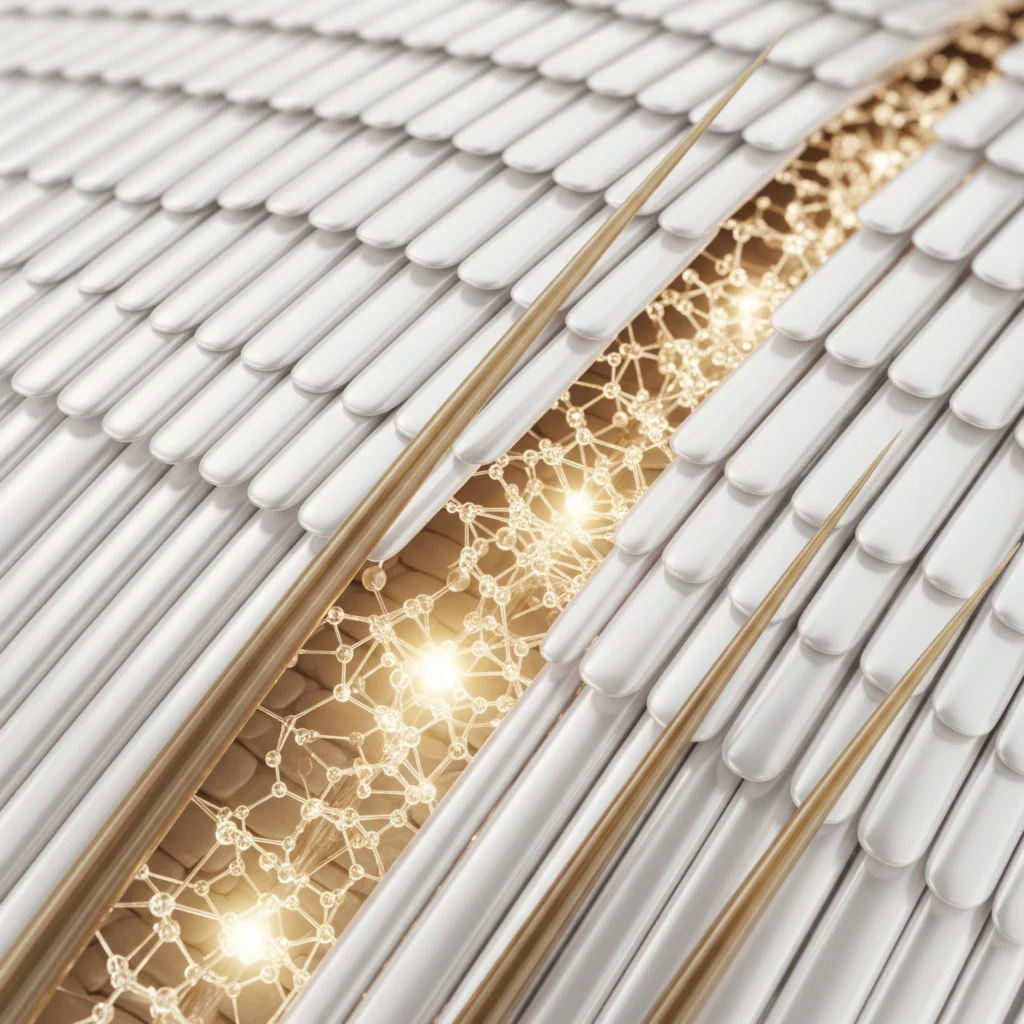
Why is this routine critical for a creamy blonde hair color? When hair is lightened, the melanin in the cortex is oxidized. This chemical process inevitably blows open the cuticle layer (the hair’s protective roof tiles) and breaks disulfide bonds, which provide structure.
Here is the biology of why the specific “Creamy” tone requires unique care:
- Light Reflection: A creamy blonde relies on warmth (gold/yellow undertones) balancing with cool (violet/ash undertones). If the cuticle is rough/damaged, light absorbs into the hair rather than reflecting off it. This makes the color look matte, dull, and “muddy” rather than creamy.
- Porosity & Tone Slippage: High porosity means the hair is like a Swiss cheese sponge—it has holes. Without protein fillers and acidic sealers (low pH products), water enters too easily and washes the toner molecules out.
- Temperature Control: Studies show that hair color molecules begin to degrade rapidly at temperatures above 370°F. While standard irons hit 400°F+, staying below 365°F ensures you are shaping the hydrogen bonds without boiling the moisture inside the cortex.
Customizations for Hair Type & Length
For Short Hair (Bobs/Pixies)
Short blondes show regrowth and damage faster.
- Adjustment: Focus your volumizing products strictly on the root. Avoid heavy heavy oils. Use a smaller diameter round brush (1 inch) to create a bevel at the ends rather than a curl.
- Porosity: Short hair is often cut more frequently, so the ends are healthier. You can use lighter styling creams.
For Long Layers (Chest length +)
The ends of long blonde hair are significantly older and likely more damaged (higher porosity).
- Adjustment: Focus 80% of your styling time on smoothing the mids and ends.
- Hydration: Use the “sandwich method” on ends—Liquid (leave-in spray), Oil (serum), then Cream. This locks in moisture effectively for high porosity ends.
Texture Specifics (Coily/Type 4)
When lifting Type 4 hair to creamy blonde, moisture retention is survival.
- Adjustment: Do not use high-heat tools daily. Opt for “stretching” styles like banding or braiding overnight to elongate hair without direct heat plate contact. Use bond-builders weekly, not monthly.
“Complete The Look” Pairings
Your creamy blonde hair color is the centerpiece, but the aesthetic requires balance.
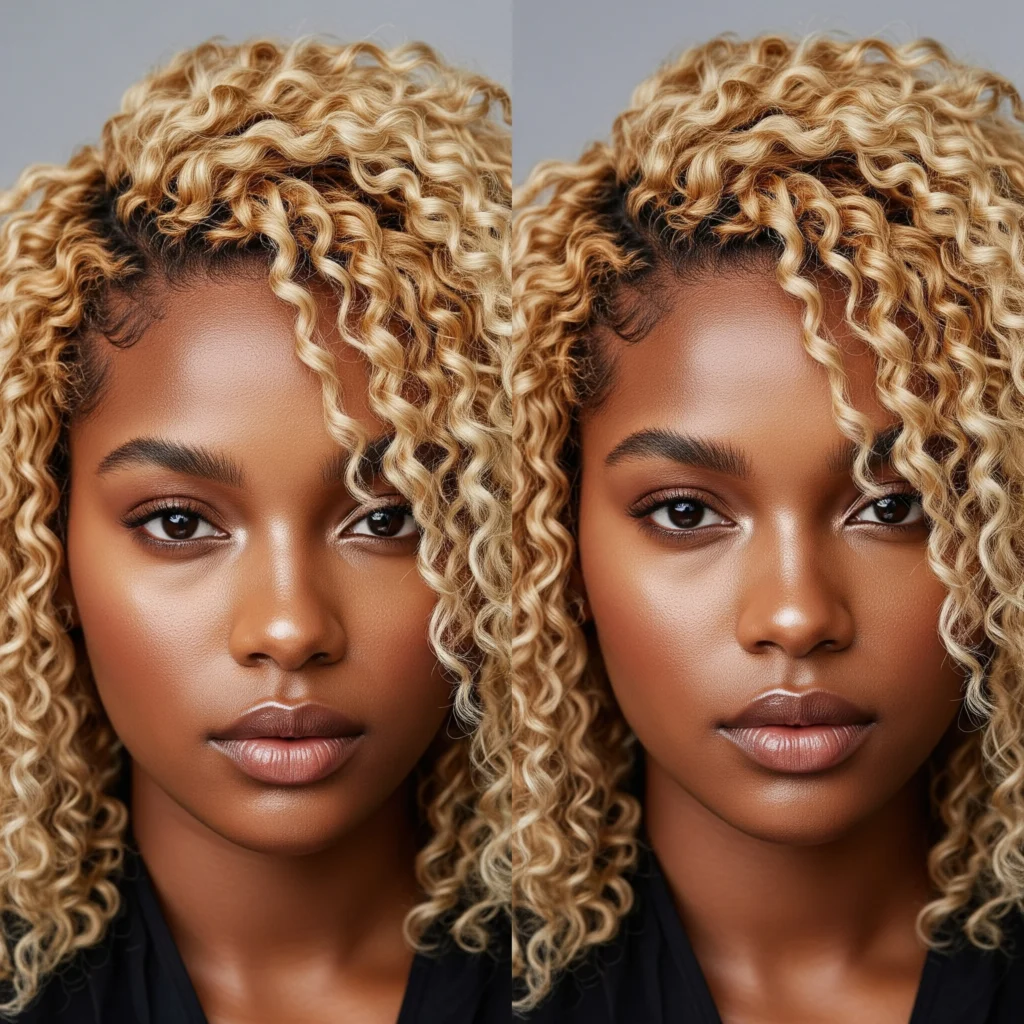
- Makeup: Because creamy blonde has both warm and cool notes, avoid foundations that are too pink. Opt for warm neutrals, peachy blushes, and bronzers to bridge the gap between skin tone and hair tone. A nude glossy lip enhances the “milky” vibe of the hair.
- Fashion Necklines: High-contrast fabrics make this hair color pop.
- Wear: Black, Emerald Green, or rich Cocoa colors. High-neck styling (turtlenecks) acts as a solid canvas for your hair to drape against, emphasizing the brightness of the blonde.
Common Styling Mistakes & Troubleshooting
Mistake 1: The “Smoked” Blonde
- Problem: Using styling irons at max temperature (450°F).
- The Science: This literally toasts the toner molecules and the protein, turning your beautiful creamy blonde into a brassy, burnt yellow.
- Solution: Never exceed 365°F.
Mistake 2: Purple Shampoo Overload
- Problem: Using purple shampoo every wash to fight warmth.
- The Outcome: Hair becomes dull, darker, and eventually looks gray or muddy.
- Solution: Use a purple mask only every 3rd or 4th wash. Creamy blonde needs a little gold to look creamy—don’t kill all the warmth!
Mistake 3: Root Volume Failure
- Problem: Heavy oils applied near the scalp.
- Solution: Keep all lipid-based products below the ear line. Use powders or sprays for the root area.
The “Refresh” & Sleep Routine
You invested in the color; now protect the investment. Mechanical damage during sleep is the #1 enemy of fragile blonde strands.
The Sleep Strategy
- Silk/Satin Defense: Cotton pillowcases act like abrasive sandpaper against a raised blonde cuticle. Switch to a 100% silk pillowcase or wear a silk bonnet.
- Protective Styling:
- Long Hair: Tie hair in a loose “pineapple” (high pony with a velvet scrunchie) or a loose braid to prevent tangling.
Day 2 & 3 Refresh
Do not wash daily; water swells the shaft and creates fatigue (hygral fatigue).
- The Revive: Spritz dry shampoo at the roots for sebum absorption.
- The Gloss: If ends look dry, emulsify a drop of dry oil in palms and gently glaze over the very ends to re-establish the hydrophobic (water-repelling) layer.
Conclusion
Achieving and maintaining a luxurious creamy blonde hair color is about working with your hair’s biology, not against it. By prioritizing bond-building, understanding your hair’s porosity, and controlling thermal application, you transform high-maintenance color into a manageable, healthy routine. The result? Hair that feels as soft as cashmere and reflects light with a mirror-like glass finish.
Have you made the switch to creamy blonde? Drop your hair texture (Type 1-4) in the comments below, or tag us on Instagram with your results so we can see your glow-up!
FAQs
Q: Will achieving a creamy blonde color damage my naturally dark hair?
A: Lifting dark hair to blonde involves breaking down melanin, which always carries some risk of cortex damage. However, a “creamy” shade is safer than “platinum” because you don’t have to lift the hair quite as light. With proper bond-building additives during the bleach process, damage can be minimized significantly.
Q: My creamy blonde turns yellow after two weeks. Why?
A: This is oxidation. Environmental elements like UV rays, pollution, and minerals in your shower water (hard water) strip the toner. Installing a showerhead filter and using a UV-protection spray can drastically extend the life of your tone.
Q: Can I achieve the styling result without heat?
A: You can achieve texture without heat, but the “glassy” shine of a creamy blonde is usually achieved by smoothing the cuticle with heat. To try a heatless method, use silk ribbons to wrap damp hair (heatless curls)—this smooths the hair shaft more effectively than air drying alone.
Q: Is this color suitable for Type 4 (Coily) hair?
A: Absolutely. However, the timeline differs. You may need multiple sessions to lift the color slowly to preserve curl integrity. We recommend protein-moisture balance treatments (bi-weekly) to ensure the coil retains its elasticity after lightening.