Kids Skin Care: Safe Routines & Products Guide for Parents
Understanding Why Kids Skin Care Deserves Special Attention Did you know that a child’s skin is up to 30% thinner than adult skin and produces less natural oil until puberty? This fundamental difference means that kids skin care isn’t just “adult skincare in smaller bottles”—it requires an entirely different approach grounded in pediatric dermatology and…
Understanding Why Kids Skin Care Deserves Special Attention
Did you know that a child’s skin is up to 30% thinner than adult skin and produces less natural oil until puberty? This fundamental difference means that kids skin care isn’t just “adult skincare in smaller bottles”—it requires an entirely different approach grounded in pediatric dermatology and ingredient safety.
As a parent, you’ve probably stood in the skincare aisle feeling overwhelmed by products claiming to be “gentle,” “natural,” or “pediatrician-tested,” wondering which ones truly protect your child’s delicate skin barrier. Between managing eczema flare-ups, preventing diaper rash, choosing safe sunscreens, and decoding ingredient labels that read like chemistry textbooks, establishing an effective kids skin care routine can feel like navigating a minefield.
The good news? With the right knowledge about how children’s skin functions differently and which ingredients truly support (rather than compromise) their developing skin barrier, you can create a simple, safe routine that sets your child up for a lifetime of healthy skin. This comprehensive guide will walk you through everything you need to know about kids skin care, backed by dermatological science and real-world practicality.
The Essential Toolkit: Key Products & Ingredients You Need
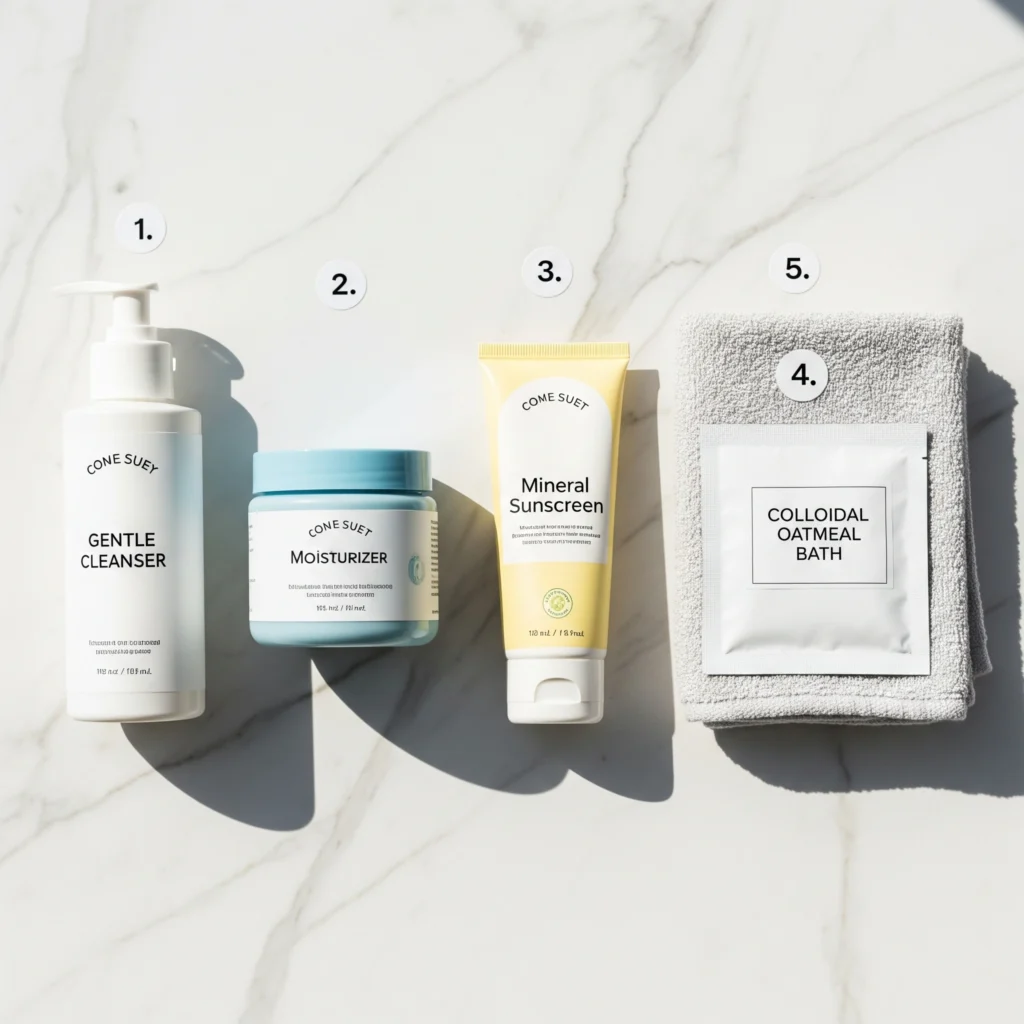
Building an effective kids skin care routine doesn’t require a dozen products. Here’s what actually matters for protecting your child’s sensitive skin barrier:
Gentle, pH-Balanced Cleanser Children’s skin has a naturally higher pH than adult skin (around 5.5-6.0), making it more vulnerable to irritation from alkaline soaps. A mild, fragrance-free cleanser preserves the protective acid mantle without stripping essential moisture. Look for creamy, non-foaming formulas that feel soft against delicate skin.
Fragrance-Free Moisturizer The cornerstone of any pediatric skincare routine, a quality moisturizer with ceramides and humectants helps reinforce the developing skin barrier. The texture should be rich enough to lock in hydration but lightweight enough to absorb quickly without leaving a greasy residue that might transfer onto clothing.
Mineral Sunscreen (SPF 30-50) Chemical sunscreen filters can trigger reactions in sensitive young skin. Mineral formulas containing zinc oxide or titanium dioxide sit on the skin’s surface, physically deflecting UV rays without absorption into the bloodstream—making them the gold standard for children’s sun protection.
Diaper Barrier Cream (for babies/toddlers) A zinc oxide-based barrier cream creates a protective shield against moisture and friction in the diaper area. The paste-like consistency should adhere to skin even in high-moisture environments, preventing painful diaper rash before it starts.
Colloidal Oatmeal Treatment (for eczema-prone skin) This finely ground oatmeal contains anti-inflammatory compounds that soothe irritated, itchy skin. Available as bath soaks or leave-on creams, colloidal oatmeal is a dermatologist-recommended solution for managing pediatric eczema and general skin sensitivity.
The Ultimate Step-by-Step Guide to Building Your Child’s Skincare Routine
Creating consistency is key when it comes to pediatric skin health. Here’s how to structure morning and evening routines that protect without overwhelming young skin.
Step 1: The Gentle Morning Cleanse (Ages 2+)
For most children, a simple water rinse in the morning is sufficient—their skin doesn’t produce excess oil overnight like adult skin does. If your child has been particularly sweaty or has residue from nighttime moisturizer, use a dime-sized amount of gentle cleanser on a soft washcloth. Massage in circular motions for 20-30 seconds, then rinse thoroughly with lukewarm water. Pat (never rub) dry with a clean towel, leaving skin slightly damp for the next step.
For babies under 2: Skip morning cleansing entirely unless addressing a specific concern like cradle cap or residual spit-up.
Step 2: Moisturize While Skin Is Damp
This is the golden window for locking in hydration. Within 3 minutes of patting skin dry, apply a fragrance-free moisturizer to slightly damp skin. The dampness helps the moisturizer spread more easily and traps water molecules in the skin barrier. Use gentle, downward strokes following the direction of hair growth to prevent irritation. Focus on typically dry areas like elbows, knees, and cheeks.
Amount guide: Pea-sized amount for face, grape-sized for each limb, walnut-sized for torso.

Step 3: Apply Sunscreen (Morning Only)
If your child will be outdoors, apply mineral sunscreen as the final morning step. Use approximately one teaspoon for the face and neck, ensuring complete coverage including ears, back of neck, and any exposed scalp areas. Reapply every 2 hours during outdoor play or immediately after swimming/sweating. For infants under 6 months, shade and protective clothing are preferred over sunscreen.
Step 4: The Evening Cleansing Ritual
Bath time should happen 3-4 times weekly (not daily, which can strip natural oils). Use lukewarm water—never hot—and limit soaking to 5-10 minutes. Apply cleanser only to areas that truly need it: hands, feet, diaper area, and any visibly dirty spots. Let your child play in clean water for the remaining bath time. For eczema-prone children, add colloidal oatmeal to bathwater for additional soothing benefits.
Step 5: The Nighttime Moisture Lock
This is the most important application of the day. Immediately after patting skin dry from the bath (again, within 3 minutes), apply a generous layer of moisturizer to the entire body. Nighttime is when skin repair happens, and a good occlusive moisturizer supports this natural process. For children with eczema, consider a thicker ointment-based formula on problem areas.
The Science Behind It: Why This Method Works
Understanding the unique characteristics of pediatric skin helps explain why these specific approaches are essential:
Children’s Skin vs. Adult Skin: Key Differences
Barrier Function
- Children’s Skin: Underdeveloped until age 12; more permeable
- Why It Matters for Care: Increased absorption of both beneficial and harmful substances; requires gentle, safe ingredients only
Transepidermal Water Loss (TEWL)
- Children’s Skin: Higher rate of moisture evaporation
- Why It Matters for Care: Needs frequent moisturization to prevent dehydration and maintain barrier integrity
Sebum Production
- Children’s Skin: Minimal until puberty hormones activate
- Why It Matters for Care: Skin is naturally drier; lacks adult skin’s self-moisturizing capability
pH Level
- Children’s Skin: Higher (less acidic) than adult skin
- Why It Matters for Care: More vulnerable to bacterial colonization; requires pH-balanced products
Immune Response
- Children’s Skin: Developing immune system
- Why It Matters for Care: Greater susceptibility to irritation, allergic reactions, and sensitivity to fragrances
Key Ingredient Science:
Ceramides are lipid molecules that make up 50% of the skin barrier. In children’s formulations, they help “fill in the gaps” of the underdeveloped barrier, reducing water loss and preventing irritant penetration.
Colloidal Oatmeal contains avenanthramides—anti-inflammatory compounds clinically proven to reduce itching and redness. It also contains beta-glucans that support skin barrier repair, making it invaluable for eczema management.
Zinc Oxide provides broad-spectrum UV protection without chemical absorption, plus it has natural anti-inflammatory and antimicrobial properties that make it ideal for both sun protection and diaper rash prevention.
Key Ingredient Science:
Ceramides are lipid molecules that make up 50% of the skin barrier. In children’s formulations, they help “fill in the gaps” of the underdeveloped barrier, reducing water loss and preventing irritant penetration.
Colloidal Oatmeal contains avenanthramides—anti-inflammatory compounds clinically proven to reduce itching and redness. It also contains beta-glucans that support skin barrier repair, making it invaluable for eczema management.
Zinc Oxide provides broad-spectrum UV protection without chemical absorption, plus it has natural anti-inflammatory and antimicrobial properties that make it ideal for both sun protection and diaper rash prevention.
Customizing Your Routine: For Different Skin Types & Goals
Every child’s skin has unique needs. Here’s how to adapt the core routine:
For Eczema-Prone or Very Sensitive Skin Double down on moisture with twice-daily moisturizer applications, even on “good” days—consistency prevents flare-ups better than reactive treatment. Choose fragrance-free products labeled “hypoallergenic” and perform patch tests on a small area before full application. Add colloidal oatmeal baths 2-3 times weekly and consider “wet wrap therapy” (applying damp pajamas over moisturized skin) during severe flare-ups.
For Active, Outdoor-Loving Kids Sun protection becomes non-negotiable. Apply mineral sunscreen 15-30 minutes before going outside to allow proper bonding with skin. Reapply more frequently than you think necessary—studies show most parents under-apply by 50%. After outdoor play, use a gentle cleanser to remove sunscreen, dirt, and sweat, then immediately moisturize.
For Children with Darker Skin Tones Hyperpigmentation from minor irritations and insect bites is more common in children with higher melanin levels. Consistent moisturization and sun protection help prevent these marks. If hyperpigmentation occurs, avoid harsh “lightening” treatments; instead, maintain the barrier-supporting routine and consult a pediatric dermatologist if concerns persist.
For Newborns and Infants (0-6 Months) Less is more. Avoid products entirely unless addressing a specific concern like cradle cap or severe dryness. When moisturization is needed, use minimal product and focus only on problem areas. Never apply sunscreen to infants under 6 months—use shade, protective clothing, and timing to avoid peak UV hours instead.
Common Mistakes to Avoid (And What to Do Instead)
Even well-intentioned parents make these frequent kids skin care errors:
Mistake #1: Daily Baths with Bubble Bath or Harsh Soaps Bathing every day with foaming products strips the limited natural oils children’s skin produces, leading to dryness and barrier damage. Do this instead: Bathe 3-4 times weekly with a gentle, fragrance-free cleanser applied only to necessary areas. On “off” days, do a quick wipe-down of hands, face, and diaper area.
Mistake #2: Assuming “Natural” or “Organic” Means Safe Plant-based ingredients can be highly allergenic—essential oils, botanical extracts, and natural fragrances are common irritants in pediatric dermatology. Do this instead: Focus on ingredient simplicity rather than marketing claims. Shorter ingredient lists with recognizable, science-backed components are safer than lengthy “natural” formulations.
Mistake #3: Using Adult Products in Smaller Amounts Adult skincare often contains actives (retinoids, acids, high concentrations of active ingredients) and fragrances inappropriate for children’s permeable skin barrier. Do this instead: Invest in products specifically formulated for pediatric use, which account for children’s unique skin physiology and safety requirements.
Mistake #4: Applying Moisturizer to Completely Dry Skin When skin is fully dry, moisturizers sit on the surface rather than penetrating effectively. Do this instead: Apply within 3 minutes of bathing while skin is still slightly damp. This “damp skin moisturization” technique can increase hydration effectiveness by up to 10 times.
Mistake #5: Over-Cleansing Problem Areas When children develop rashes or irritation, parents often increase cleansing frequency, which typically worsens the problem by further compromising the barrier. Do this instead: During flare-ups, reduce cleansing and increase moisturization frequency. If the issue persists beyond 5-7 days, consult a pediatric dermatologist rather than trying more products.
Storing & Maximizing Your Body Care Products
Proper storage extends product efficacy and prevents contamination that could irritate sensitive skin:
Temperature Control: Store kids skin care products in a cool, dry place away from bathroom humidity and direct sunlight. Heat and moisture degrade active ingredients, particularly in mineral sunscreens and antioxidant-rich formulations.
Contamination Prevention: Use pump dispensers rather than jars to minimize bacterial introduction from fingers. If using jar packaging, scoop product with a clean spatula rather than direct hand contact.
Expiration Awareness: Children’s products often have shorter shelf lives due to reduced preservative systems. Mark the opening date on each product and discard after 6-12 months, even if not fully used. Never use expired sunscreen—mineral filters can degrade and lose protective efficacy.
Organization System: Keep a dedicated “kids skincare basket” with all necessary products easily accessible. This encourages routine consistency and prevents the temptation to grab whatever adult product is nearby when you’re in a hurry.

Building Healthy Habits That Last a Lifetime
The kids skin care routine you establish today creates the foundation for your child’s relationship with skincare for decades to come. By prioritizing gentle, science-backed approaches over marketing hype and teaching your children to listen to their skin’s signals, you’re not just preventing today’s rashes—you’re instilling lifelong healthy habits.
Your next step: Start with just two products—a gentle cleanser and quality moisturizer—and build consistency with the morning and evening routine outlined above. Once this becomes habit (usually 2-3 weeks), add sun protection as needed for your lifestyle.
Have questions about your child’s specific skin concerns? Drop them in the comments below—I read and respond to every question. And don’t forget to subscribe for more evidence-based kids skin care guidance delivered straight to your inbox.
Your Top Questions, Answered (FAQs)
Q: At what age should I start a skincare routine for my child? A: Basic moisturization can begin at birth if needed for dryness, but a formal “routine” is typically introduced around age 2-3 when children can participate in the process. Before age 2, less is more—address specific concerns only rather than implementing a daily regimen.
Q: How can I tell if my child has eczema versus just dry skin? A: Eczema typically appears as red, scaly patches in the creases of elbows, behind knees, on cheeks, or on wrists/ankles. It’s intensely itchy and tends to flare and subside cyclically. Simple dry skin responds quickly to moisturization without recurring patterns. If you suspect eczema, consult a pediatric dermatologist for proper diagnosis and management.
Q: Are fragrance-free and unscented products the same thing? A: No—this is a critical distinction. “Fragrance-free” means no fragrance compounds were added. “Unscented” means fragrance chemicals may have been added to mask the natural scent of ingredients. Always choose fragrance-free for children’s sensitive skin.
Q: Can I use coconut oil as a natural moisturizer for my child? A: While popular in natural parenting communities, coconut oil is comedogenic (pore-clogging) and may worsen certain skin conditions. It also lacks the ceramides and humectants that support barrier function. A purpose-formulated pediatric moisturizer is a safer, more effective choice.
Q: What’s the difference between mineral and chemical sunscreen, and why does it matter for kids? A: Mineral sunscreens (zinc oxide, titanium dioxide) sit on skin’s surface and physically deflect UV rays. Chemical sunscreens absorb into skin and convert UV rays to heat. Because children’s skin is more permeable, mineral formulas are recommended to minimize systemic absorption of chemical filters that may act as endocrine disruptors.
Q: My child hates having lotion applied. Any tips for making it easier? A: Try warming the moisturizer between your palms first, sing a special “lotion song,” let them help pump or squeeze the product, or turn it into a massage game. For resistant toddlers, applying moisturizer while they’re distracted (watching a favorite show, looking at a book) can help establish the habit until they’re more cooperative.
Q: Should I be concerned about parabens and other preservatives in kids products? A: Preservatives are necessary to prevent bacterial and fungal contamination, which poses greater risk than properly formulated preservatives. Modern pediatric formulations use preservative systems tested for safety at the concentrations used. Focus on avoiding fragrance, essential oils, and dyes—these cause more reactions in children than preservative systems do.
Related Reading: